
Key Takeaways:
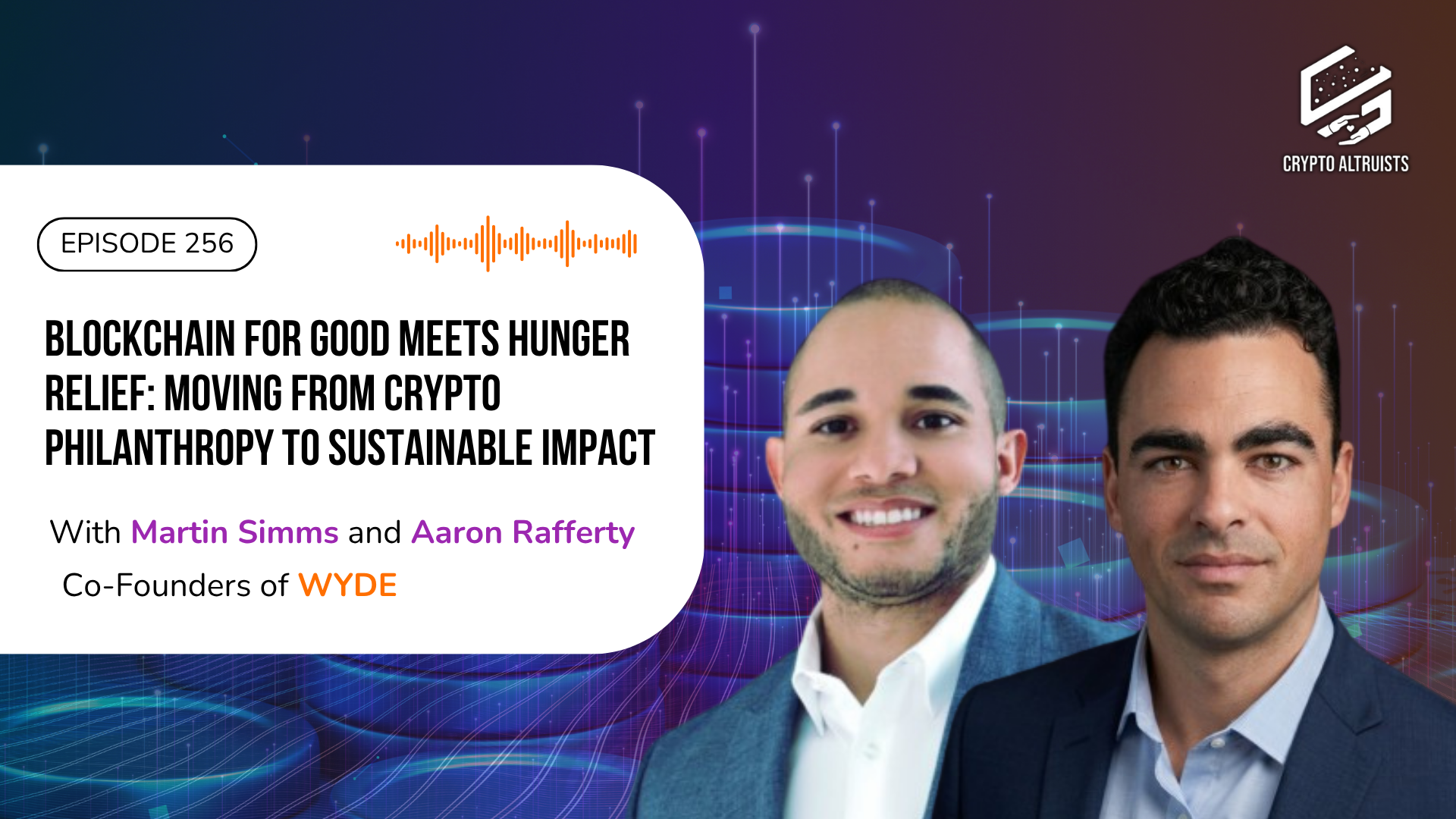
WYDE co-founders Martin Simms and Aaron Rafferty appeared on the Crypto Altruists podcast to explain the Impact Exchange, a platform built on Base that routes transaction fees into hunger-relief grants.
The founders call the approach contributory consumption, tying charitable funding to everyday activity like crypto trades and debit-card spending rather than one-off donations, with grants recorded onchain.
WYDE points to an exclusive national partnership with Feed the Children, which the episode said reached nearly 15 million people last year, and a stated goal of funding a billion meals.
WYDE co-founders Martin Simms and Aaron Rafferty appeared on the Crypto Altruists podcast, in an episode published June 24, to explain how their Impact Exchange turns financial activity into funded meals. WYDE is built on Base, the Ethereum layer-2 network, and routes transaction fees into charitable grants for hunger relief.
The founders describe the model as contributory consumption, the idea that everyday activity like crypto trades or debit-card purchases can generate charitable impact by design rather than through separate gifts. At the center is the $EAT token. WYDE says 25% of every trading fee is directed toward funding meals, and that each grant is recorded onchain so the impact can be checked publicly.
The argument targets a familiar problem in crypto giving. Co-founder Martin Simms has described most crypto philanthropy as "a founder writing a check after a token rally and posting the screenshot," a one-time gesture that fades. WYDE's case is that tying funding to ongoing transactions, and to a verified nonprofit partner, keeps the impact recurring.
WYDE announced an exclusive national partnership with Feed the Children, which the episode said reached nearly 15 million people last year. The founders said the project has funded tens of thousands of meals so far, ran a first Trade-to-Feed-athon trading competition that generated funding for meals, and this month announced an $EAT debit card that extends the model into everyday spending.
The longer vision they sketched is what they call smart currency, money that funds a cause as it changes hands, with a goal of funding a billion meals. The conversation lands in a year when crypto-native giving has been shifting from one-off gestures toward structure, including charity tokens that routed creator fees to nonprofits in days. Whether contributory consumption scales is the open question, and the meal counts recorded onchain are where the claim gets tested.
People Also Ask
What is WYDE's Impact Exchange?
WYDE describes the Impact Exchange as a platform built on Base, an Ethereum layer-2 network, that routes a portion of transaction fees into verified charitable grants for hunger relief, recorded onchain.
What is contributory consumption?
It is WYDE's term for building charitable impact into everyday financial activity, so that actions like crypto trades or debit-card purchases generate funding for a cause by default rather than through separate donations.
How does the $EAT token fund meals?
WYDE says 25% of every $EAT trading fee is directed to hunger relief, and that each grant is recorded onchain for public verification. The model is tied to an exclusive national partnership with Feed the Children.
What is WYDE's goal?
On the podcast, the founders described a vision they call smart currency and a long-term goal of funding a billion meals through ongoing transaction activity rather than one-off gifts.
Sources: Crypto Altruists (Episode 256, June 24, 2026). WYDE. Feed the Children.